Planning Center May Not Be the Problem: The Four Layers Behind Operational Chaos
When ministry operations feel chaotic, software is often the easiest thing to blame. A better diagnosis starts with four connected layers: people, process, governance, and technology.


When a ministry workflow breaks, Planning Center is often the first suspect.
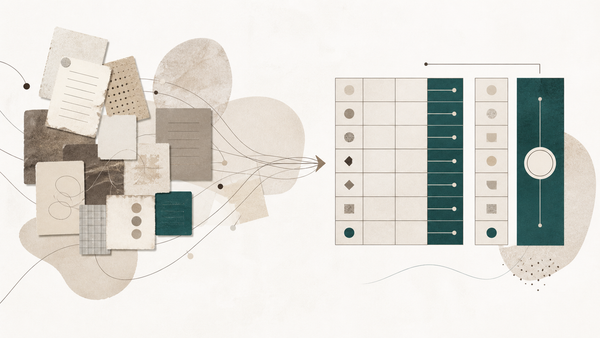
A guest form creates a record, but no one follows up. Volunteer scheduling depends on one staff member. Reports disagree. Teams keep shadow spreadsheets because they do not trust what they see in the system. The natural conclusion is that the church needs a better tool—or at least a major reconfiguration.
Sometimes the technology does need attention. But software is only one layer of the operating system behind ministry.
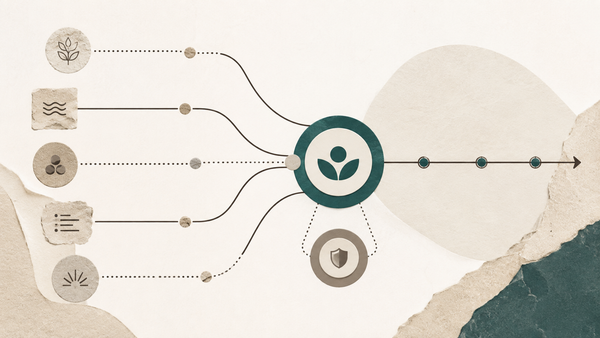
The deeper issue is often misalignment across four connected layers: people, process, governance, and technology. If those layers are unclear, a new tool can make the confusion faster without making the ministry healthier.
Before replacing or rebuilding Planning Center, diagnose the whole system.
Layer 1: People
Every workflow depends on people knowing what they own, what decision they can make, and what happens when they are unavailable.
People-layer problems often look like:
- one staff member holding critical ministry knowledge;
- several teams completing their own steps while no one owns the process end to end;
- volunteers receiving different instructions depending on who trained them;
- work stopping when a key person is absent; or
- tasks bouncing between ministries because decision rights are unclear.
Planning Center can assign a workflow card or send a notification. It cannot decide who is accountable for the outcome. That is a leadership and ownership decision.
Ask:
- Who owns this process from beginning to end?
- Who is responsible for each handoff?
- Who can make an exception or escalate a problem?
- Who serves as the backup when the primary owner is unavailable?
If those answers are unclear, changing the software will not create durable ownership.
Layer 2: Process
A process is the path work takes from a clear starting point to a defined outcome. It includes the steps, handoffs, timing, exceptions, and evidence that the work is complete.
Process-layer problems often appear as:
- guest information entering the system without a dependable follow-up path;
- duplicate checks happening inconsistently;
- onboarding steps changing from one ministry to another;
- teams maintaining spreadsheets to compensate for a workflow they do not trust; or
- reports measuring activity without confirming whether the ministry outcome occurred.
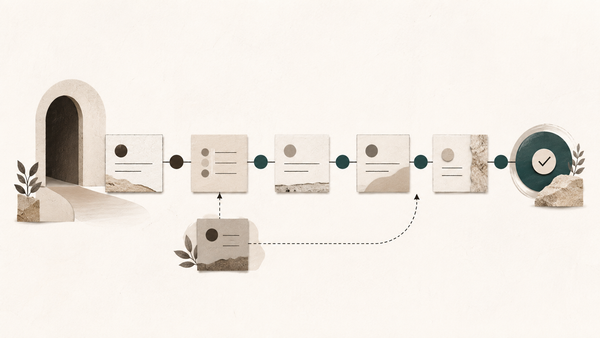
Consider a guest follow-up example. A form submission may create a person record correctly. But the ministry still needs a duplicate-check rule, an assigned owner, a response expectation, a handoff path, an exception process, and a definition of completion.
The form is not the workflow. It is only the entrance.
Ask:
- What event starts the process?
- What outcome marks it complete?
- Where are the handoffs and likely failure points?
- What happens when the normal path does not work?
- What evidence shows that the process is healthy?
Planning Center works best when it supports a process the church can already explain.
Layer 3: Governance
Governance is how a church makes operational decisions, assigns authority, protects information, and keeps systems healthy over time. It does not require a bureaucracy. It requires clear rules and ownership.
Governance-layer problems often look like:
- no standard for naming lists, workflows, teams, or forms;
- permissions that are too broad, too restrictive, or left behind after role changes;
- several definitions of the same ministry status or metric;
- improvements stalling because no one can approve a change; or
- system objects remaining attached to one individual instead of a durable role.
Without governance, a clean Planning Center account gradually becomes inconsistent again. New objects are created, naming patterns drift, permissions accumulate, and local workarounds become permanent.
Ask:
- Who approves changes to critical workflows and data structures?
- Which naming, permission, and data standards are documented?
- How often are access, ownership, and high-risk processes reviewed?
- Which decisions belong to ministry leaders, system administrators, or executive leadership?
Healthy governance protects ministry work without making routine work unnecessarily difficult.
Layer 4: Technology
Technology is the final layer—not because it matters least, but because its configuration should follow the needs of the other three layers.
Technology-layer problems may include:
- a feature that does not support the church's actual workflow;
- disconnected products or integrations;
- unclear source-of-truth rules;
- fields and reports that do not answer the intended question;
- automations with hidden side effects; or
- a real platform limitation that requires a compensating human control.
This is where Planning Center expertise matters. The church needs to know what the platform can do natively, what requires a different configuration, and where a documented manual step is safer than a fragile workaround.
Ask:
- Does the configuration reflect the real ministry process?
- Is the expected behavior supported natively?
- Which system owns each important piece of data?
- What happens when an automation or integration fails?
- Are people using the tool consistently enough for reports to be trustworthy?
Technology should make a healthy operating model visible and repeatable. It should not be expected to invent one.
Diagnose before you rebuild
When operational pain surfaces, resist the urge to start with features.
Choose one important workflow—guest follow-up, volunteer onboarding, group attendance, check-in, or staff offboarding—and map it across the four layers:
- People: owner, contributors, backup, and escalation path.
- Process: trigger, steps, handoffs, exceptions, and completion evidence.
- Governance: decision rights, standards, permissions, and review cadence.
- Technology: products, objects, automations, integrations, and limitations.
Then identify the first failure point. The answer may be a Planning Center configuration change. It may also be an ownership decision, a missing standard, an unclear handoff, or an undocumented exception.
That distinction matters. It prevents a church from spending time and money rebuilding the visible tool while leaving the underlying operating problem in place.
From chaos to confidence
Operational confidence does not mean every ministry process is automated. It means important work is clear, owned, repeatable, and resilient—and that technology supports those qualities.
Planning Center may be part of the solution. It simply should not carry responsibility for decisions the church has not yet made.
Join the OSI pilot and receive a focused operational snapshot.