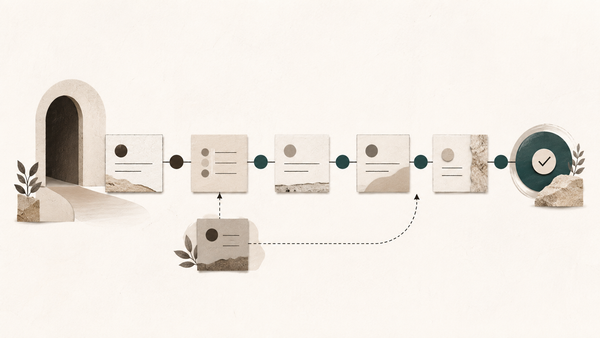
Who Owns Ministry Operations When Everyone Owns One Piece?
Ministry work often crosses teams, systems, and roles. If everyone owns one step but no one owns the outcome, important handoffs become fragile.

Church teams are often full of responsible people. The communications team owns the form. An administrator maintains Planning Center. A ministry leader contacts the guest. A volunteer coordinates the next step.
Each person owns a piece. Yet when a handoff fails, no one owns the whole outcome.
This is the gap between task ownership and operational stewardship.
Task ownership is necessary but incomplete
Task ownership answers, “Who completes this step?” End-to-end ownership answers, “Who makes sure the process reaches its intended outcome?”
Without an end-to-end owner:
- local tasks can be completed while the overall process stalls;
- teams optimize their own step at the expense of the next one;
- exceptions bounce between departments;
- reports show activity without proving completion; and
- important knowledge accumulates in one person's head.
This does not mean one person must do all the work. It means one role has the authority and visibility to steward the full process.
Name the outcome first
Before assigning ownership, define what the process is meant to accomplish. “Manage the guest workflow” is an activity. “Ensure every approved guest intake receives timely, appropriate follow-up and a documented disposition” is an outcome.
A useful outcome is specific enough to guide decisions but broad enough to survive changes in tools and staffing.
Assign four kinds of responsibility
For each cross-functional process, identify:
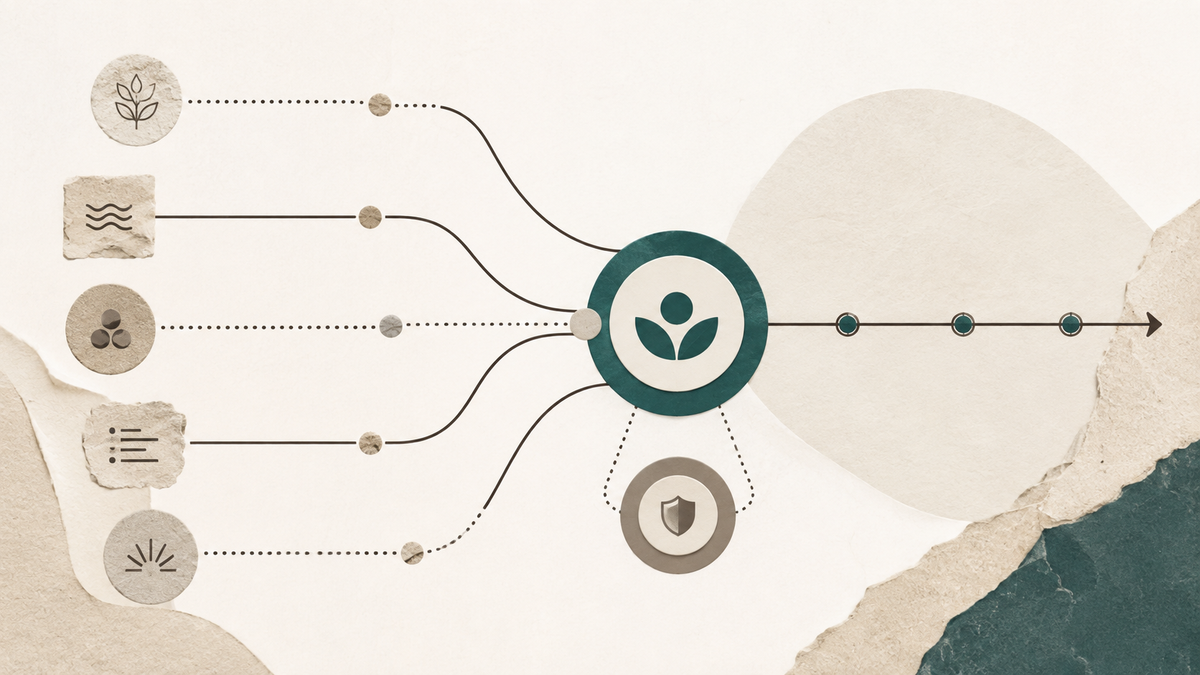
- Accountable owner: the role responsible for the end-to-end outcome.
- Step owners: the people or roles completing defined parts of the work.
- Decision owner: the person authorized to resolve exceptions or approve changes.
- Backup owner: the role that maintains continuity during absence or transition.
In a small church, one person may fill several roles. Naming them still matters because the responsibilities can later be transferred without redesigning the process.
Give the owner enough visibility
Accountability without visibility creates frustration. The process owner should be able to see unassigned work, overdue handoffs, unresolved exceptions, and completion status.
Planning Center may support this through workflow assignments, lists, reports, or notifications. The exact configuration matters less than whether the owner can answer:
- What is waiting?
- What is overdue?
- Where is the process breaking?
- Who needs support or a decision?
- What has been completed, and how do we know?
Separate ownership from unlimited access
Operational ownership does not require access to every sensitive detail. Apply least-privilege permissions and route pastoral, financial, child, or care information only to authorized roles.
The owner needs enough information to steward the process while protecting the people represented in the system. Good governance defines both responsibility and boundaries.
Plan for transition before it happens
Staff transitions expose hidden dependencies. Before a role changes, inventory the forms, lists, workflows, automations, reports, integrations, and recurring reviews connected to that person.
Transfer ownership to the durable role, confirm backup access, document critical decisions, and test the handoffs. Do not wait until an account is deactivated to discover that the ministry process depended on it.
Steward the system, not just the queue
The end-to-end owner should periodically review whether the process still serves the ministry outcome. Are the steps necessary? Are exceptions increasing? Have definitions drifted? Does the technology still fit the real work?
Ownership is not about control for its own sake. It creates clarity, resilience, and better care. When one role can see and steward the complete path, teams can contribute their pieces with greater confidence.
Join the OSI pilot and receive a focused operational snapshot.